Tesamorelin: where the fat changed
A scan can show a change the bathroom scale misses. Tesamorelin’s case depends on fat location, HIV-associated lipodystrophy and continued treatment.
HIV-associated visceral fat
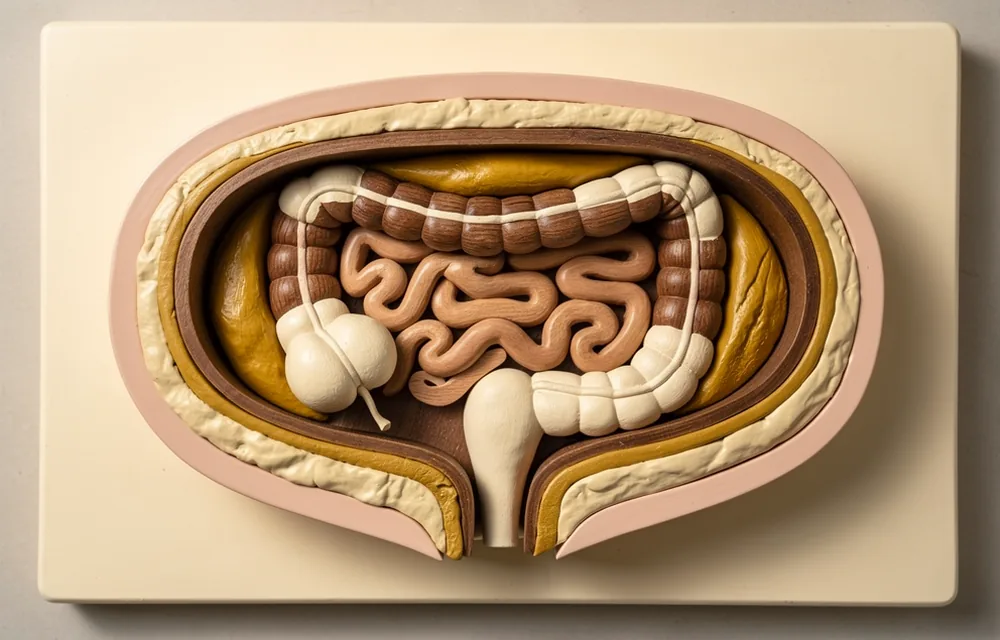
Visceral fat surrounds organs deep inside the abdomen. It differs from the fat directly under the skin. Tesamorelin’s strongest human evidence concerns adults with HIV-associated lipodystrophy, a disorder of fat distribution. That setting gives the findings their medical meaning.
In the six-month trial of 50 adults receiving HIV treatment, the treatment effect on visceral-fat area was -42 square centimetres, comparing the changes in the tesamorelin and placebo groups. Liver fat also declined more with tesamorelin. I like how concrete the scan measurement is: it specifies where the change occurred. It cannot be converted into pounds lost or a forecast for ordinary weight gain.
Continuing and stopping treatment
The 52-week programme began with 273 people receiving tesamorelin and 137 receiving placebo. Continued treatment sustained a -18% change in visceral fat at 52 weeks; fat reaccumulated after treatment stopped. Overall glucose changes during the programme were not clinically significant.
For my optimism, the return of fat is a substantial condition. The benefit can be real while its persistence depends on continued treatment. I weigh a lasting change differently from a change maintained during treatment.
Pituitary stimulation
Tesamorelin stimulates the pituitary to release the body’s own growth hormone in pulses. Growth hormone then stimulates liver production of IGF-1, a separate growth factor. Those actions distinguish it from the appetite-focused gut-hormone medicines.
In the brief study of 13 healthy men, two weeks of treatment raised overnight growth hormone and increased IGF-1 by 181 micrograms per litre. Fasting glucose and insulin-stimulated glucose uptake did not change significantly. That is a short hormone-response experiment. The participants’ strength, longevity and long-term cancer risk remain separate questions.
Pooled findings and safety
A 2026 meta-analysis of five randomised trials found reductions in visceral fat, liver fat and trunk fat in HIV-associated lipodystrophy, with an increase in lean body mass. Lean mass includes water and organs as well as muscle; an increase leaves strength unresolved.
LiverTox records United States approval in 2010 for excess abdominal fat in adults with HIV-associated lipodystrophy and judges clinically apparent liver injury unlikely. Approval excludes routine obesity treatment and anti-aging claims. Active malignancy is a labelled contraindication. Growth-hormone and IGF-1 stimulation bring longer-term cancer-safety questions, and reassuring average glucose results cannot guarantee unchanged glucose in each person. Tesamorelin is prohibited in sport.
The casual phrase “belly-fat treatment” reaches beyond the HIV-associated lipodystrophy studied here. The trials have a more precise subject, and that subject is already interesting enough.